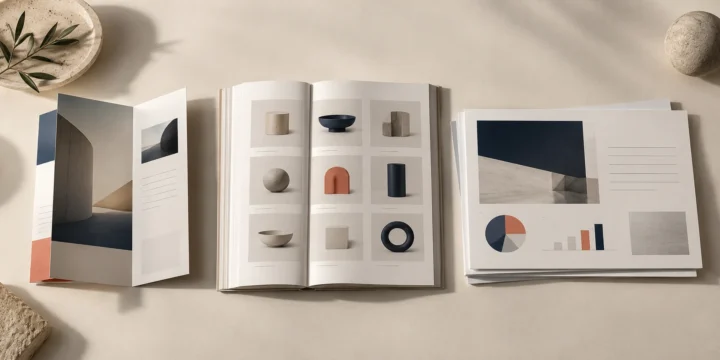


A brochure introduces a company and its offer. A catalogue helps people explore and compare products. A sales deck supports a conversation. The right format depends on what someone needs to understand or decide, and how they will encounter the material.
For a business in Tangier or elsewhere in Morocco, producing more documents is not always the first priority. Start with the material used in your most frequent commercial conversation, then build the others around the same approved information.
Give each document a job
A company brochure can bring together the promise, activities, evidence and contact details. It needs to make sense without a spoken explanation. A catalogue organises choice through families, references, specifications and comparison criteria.
A sales presentation can use less on-screen copy because someone is there to explain it. A version sent on its own may need additional context. Specify whether the document will be read, presented or used in both situations.
A product sheet serves a more focused purpose. It brings together the information required for a single reference in a repeatable structure. When the range changes frequently, individual sheets may be more useful than one large catalogue.
Build the content structure first
Before deciding the page count, list the questions the material needs to answer. Arrange the content in a useful reading order: understand the offer, identify a suitable option, check the details and know what to do next.
For a catalogue, define a shared information model: name, reference, description and relevant specifications or variants. The same information should appear in the same place across product entries. Have the appropriate person approve technical information before the layout is finalised.
Test a difficult page early
Choose a product with a long name, several variants or a dense set of details. It will put the layout under useful pressure. Designing only the simplest page postpones the problems until the middle of the catalogue.
Also test a spread, a less generous image and the second language version. The grid needs to keep the hierarchy clear while accommodating these differences. Consistent logos and colours cannot do that work on their own.
Prepare for the way people will read it
A printed version requires decisions about format, paper, binding and the printer’s production requirements. A PDF for screen use should be manageable in size, readable and easy to navigate. Links can help, while essential information should remain understandable without them.
Ask for exports suited to these uses and review a sample or proof before a significant print run. An on-screen preview alone cannot establish how paper and colour will appear in production.
Plan for the next update
Who will edit a reference, replace a photograph or add a page? The answer affects the production tool and the flexibility required. A stable catalogue can be maintained differently from a document updated every week.
Keep approved copy, imagery and product information in one accessible place. Give distributed documents a date or version identifier. This helps the team find the current file and retire outdated information.
Prepare a useful design request
Share the intended audience, context of use, languages, available content and update frequency. Include the documents your team actually uses, even if they are not yet working well.
At Brandegree, we design these materials as applications of the identity. The task is to make the offer clear, organise information and deliver usable files. Our brief framework can help you gather the decisions needed to define the work.